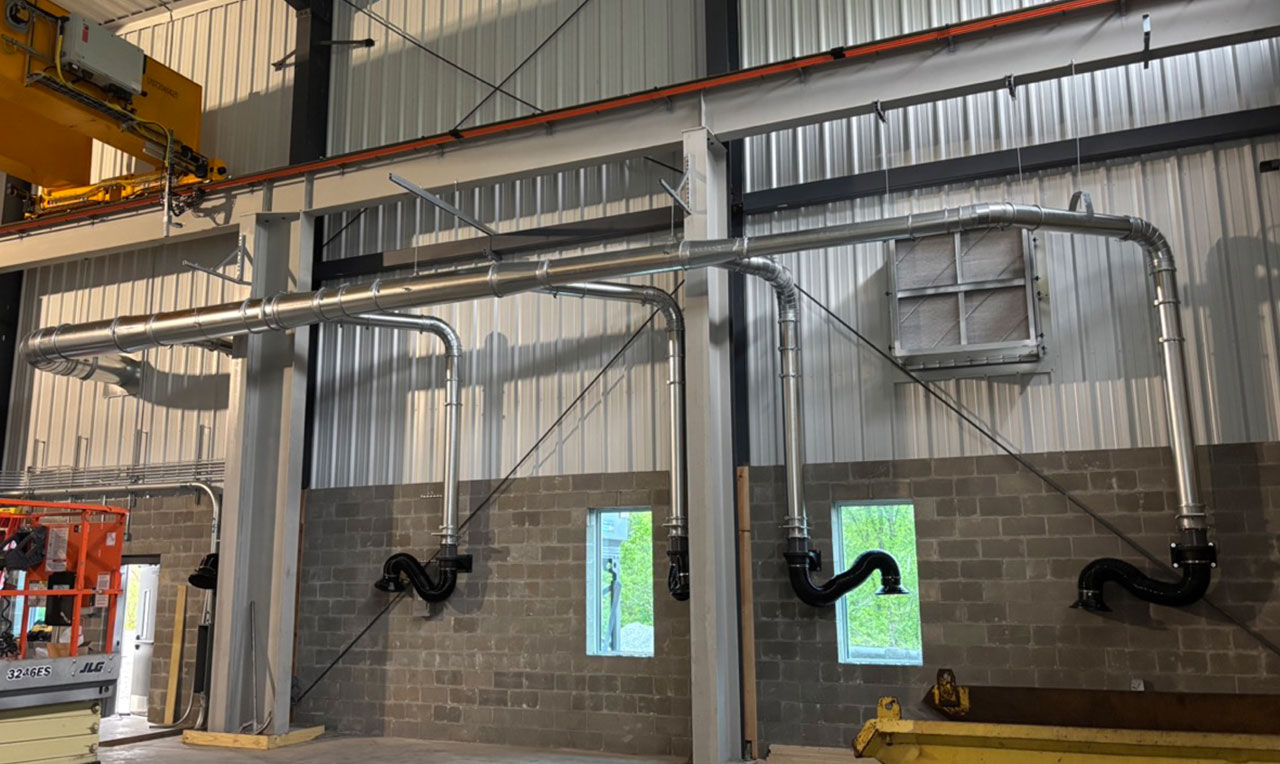
The Difference Between Clamp-Together, Spiral, and Welded Ductwork
Industrial ductwork generally falls into three major categories—clamp-together (flanged/rolled-lip), spiral, and welded duct. Each type serves a different purpose, depends on the application, and comes with its own advantages and trade-offs.
1. Clamp-Together Duct (Quick-Fit / Rolled-Lip)
Best for: Dust collection, light-to-medium industrial applications, systems that change or expand frequently.
What it is:
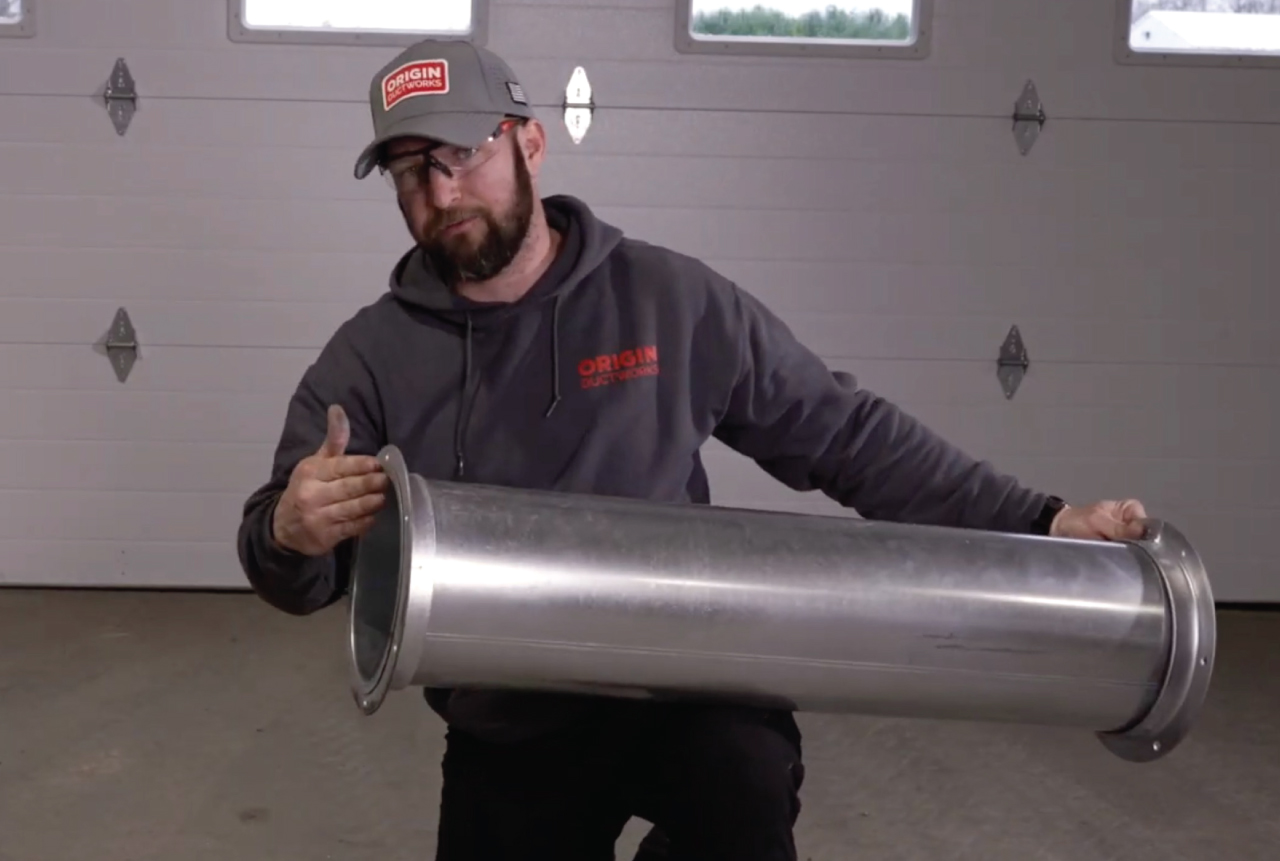
Clamp-together duct uses a rolled lip on each end and a stainless-steel clamp with a gasket to join sections. It installs quickly with no screws or rivets.
Pros
- Fast installation (up to 40–50% labor savings vs. spiral/welded)
- Easy to modify—great for shops that rearrange equipment
- Reusable components
- Cleaner interior with fewer obstructions = lower static pressure
Cons
- Higher material cost than spiral
- Not ideal for very high pressure or highly abrasive materials
- Limited availability in large diameters and custom shapes
Typical Industries: Woodworking, metalworking, plastics, light manufacturing, CNC machines, dust collectors.
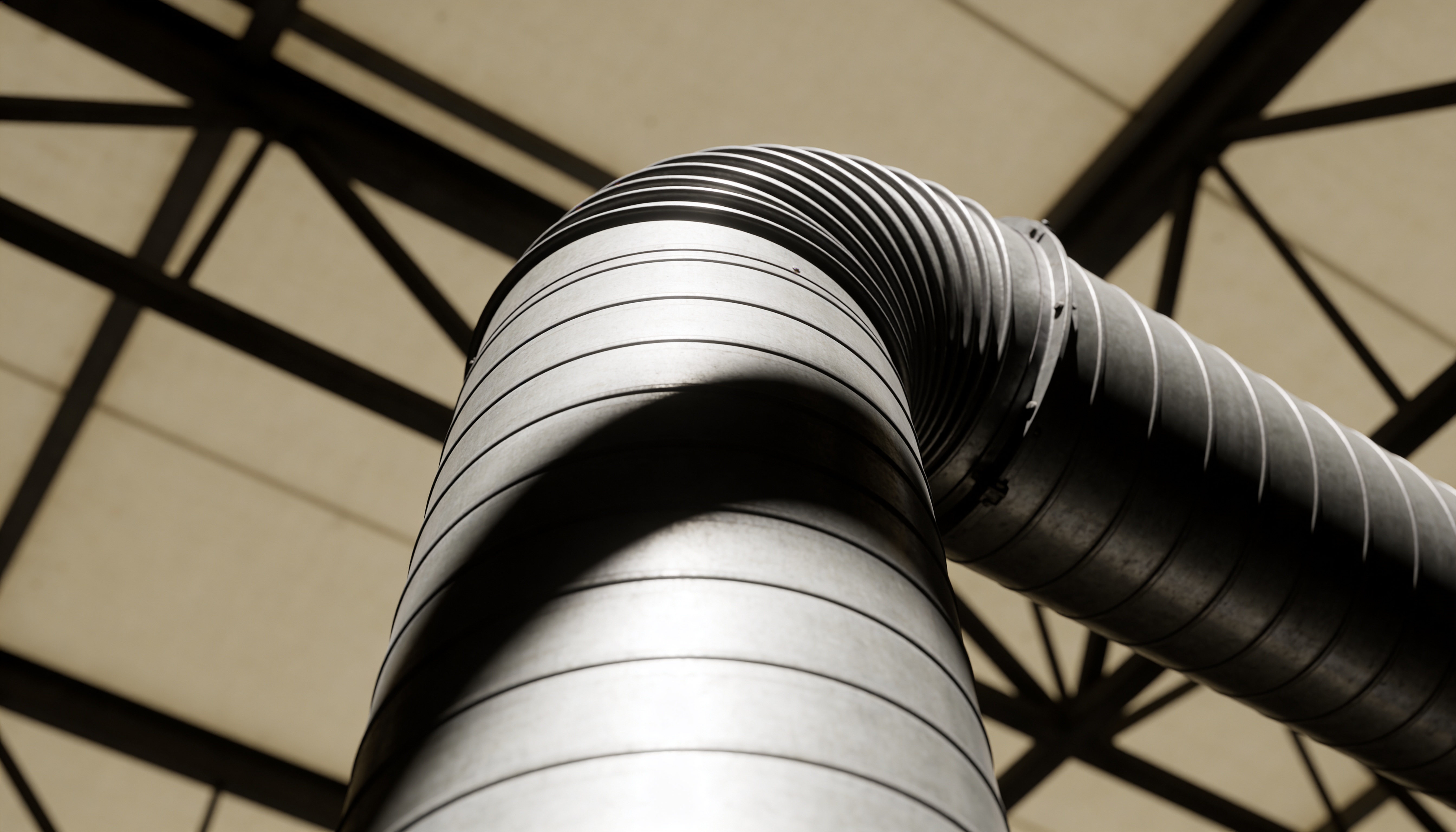
2. Spiral Duct
Best for: Permanent systems, HVAC supply/return, larger airflow volumes, mid-pressure industrial systems.
What it is:
Spiral duct is made by forming a continuous strip of metal into a tube with a spiral-shaped seam. It’s joined using slip-fits, screws, flanges, or sealants depending on the application.
Pros
- Lower material cost than clamp-together
- Wide range of diameters (all the way to 60"+)
- Strong and lightweight
- Good for long, straight runs
- Can be sealed for higher efficiency in HVAC systems
Cons
- Higher labor cost—requires tools, sealant, screws, lifting equipment
- Harder to modify after installation
- More internal friction than clamp-together for dust collection
Typical Industries: HVAC, factories with long trunk lines, large ventilation systems, paint booths.
3. Welded Duct (Fully Welded / Fabricated)
Best for: Heavy-duty, high-pressure, high-temperature, or highly abrasive processes.
What it is:
Welded duct is custom fabricated from plate or sheet metal. All seams are welded (stitch or continuous) and often reinforced with rings or flanges.
Pros
- Strongest option for rugged or abrasive applications
- Handles high static pressure and high temperature
- Custom shapes, transitions, and heavy gauges
- Best for conveying sparks, metal dust, sand, glass, or corrosives
Cons
- Highest cost—material + fabrication + installation
- Longer lead times
- Heavy; requires lifting equipment
- Not ideal for systems that need frequent changes
Typical Industries: Foundries, mining, powder handling, chemical processing, thermal exhaust, spark-generating processes.
In summary, while spiral and welded duct systems have their place in permanent or heavy-duty industrial applications, clamp-together duct offers the greatest overall value for most dust collection and light-to-medium industrial systems. Its fast installation, clean airflow, and unmatched flexibility allow facilities to adapt as operations change—without costly downtime or rework. For operations that prioritize efficiency, scalability, and ease of maintenance, clamp-together duct is the smart, future-ready solution.